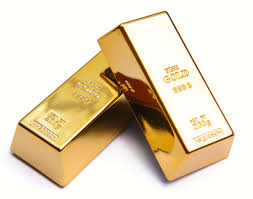
Gold has delivered exceptional performance in recent years, with prices reaching multiple record highs throughout 2025 and entering 2026 near $4,350–$4,380 per ounce. Driven by strong central bank demand, persistent inflation concerns, geopolitical tensions, and investor shifts toward safe-haven assets, gold continues to attract attention as a long-term store of value.
Many investors now seek clarity on the gold price prediction next 5 years, covering 2026 through 2030. While forecasts vary widely depending on economic assumptions, most major analysts maintain a constructive long-term view, with structural factors supporting gradual appreciation, potential consolidation, and upside risks in bullish scenarios.
This article compiles insights from leading institutions and analytical sources to provide a balanced overview of expected trends, key drivers, risks, and realistic price ranges.
Why Gold Prices Are Expected to Trend Higher Long-Term
Gold’s trajectory over multi-year periods is influenced by several enduring fundamentals.
Central banks, particularly in emerging markets, continue to accumulate gold as a diversification tool away from U.S. dollar reserves. Purchases remain elevated compared to pre-2022 levels, even if they moderate slightly from peak years.
Investor demand through ETFs, bars, and coins provides additional support, especially during periods of uncertainty. Lower real interest rates reduce the opportunity cost of holding non-yielding gold.
Geopolitical fragmentation, trade frictions, and concerns over government debt levels reinforce gold’s safe-haven role. These structural elements create a positive bias in most gold price predictions next 5 years.
Gold Price Prediction Next 5 Years: Year-by-Year Overview
Analysts offer a spectrum of targets, reflecting different economic scenarios. Below is a synthesis of current consensus views as of early 2026.
2026
Most forecasts cluster in the $4,500–$6,000 range by year-end. J.P. Morgan anticipates an average around $5,055 in Q4, with potential toward $5,000–$5,400. Goldman Sachs and others see $4,900–$6,000 under continued demand and easing conditions. Optimistic technical models push higher, while base cases expect moderate gains after 2025’s sharp rise.
2027
Projections become more dispersed. Some institutions foresee continued momentum toward $5,400–$7,000, assuming persistent inflation hedging and central bank activity. More conservative views expect consolidation in the $5,000–$6,000 area if growth strengthens.
2028
Analysts generally anticipate further appreciation, with ranges from $5,500–$9,000+. Structural demand is expected to underpin prices, though volatility from policy shifts remains possible.
2029
Longer-term models suggest $6,000–$10,000 territory in optimistic cases, driven by sustained accumulation and macro tailwinds.
2030
By the end of the decade, many bullish forecasts target $6,000–$10,000, with some outliers above $10,000 in high-inflation or extreme uncertainty scenarios. A reasonable consensus peak range sits around $6,000–$8,000, assuming gradual upward pressure.
These projections highlight a generally upward bias in the gold price prediction next 5 years, though short-term corrections of 5–20% remain possible after strong rallies.
Key Factors Influencing the Next 5 Years
Positive Drivers
- Ongoing central bank buying (projected 700–900 tonnes annually)
- ETF inflows and retail demand in emerging markets
- Lower real yields and accommodative monetary policy
- Geopolitical risks and trade tensions
- Limited mining supply growth
Potential Headwinds
- Stronger-than-expected global growth and dollar strength
- Reduced central bank purchases or profit-taking
- Rapid inflation control leading to higher rates
- Technological shifts reducing industrial demand
The balance of these factors leans supportive for long-term appreciation.
Comparison of Major Analyst Forecasts (2026–2030)
Major institutions and models provide the following ranges (year-end or average estimates):
- 2026: $4,900–$6,000 (J.P. Morgan, Goldman Sachs, others)
- 2027: $5,400–$7,000+ (various analytical models)
- 2028: $5,500–$9,000+
- 2029–2030: $6,000–$10,000+ (bullish cases, some outliers higher)
Note: These are consensus views; extreme scenarios can push prices significantly beyond or below these levels.
Risks and Uncertainties in Long-Term Gold Predictions
Forecasting over five years involves substantial uncertainty. Sudden policy reversals, technological breakthroughs affecting supply, or major resolutions of geopolitical conflicts could alter trajectories.
Short-term volatility is likely, with corrections common after multi-year rallies. Investors should approach long-term gold positions with diversification and realistic expectations.
Frequently Asked Questions (FAQs)
What is the gold price prediction next 5 years for 2030?
Most analysts project $6,000–$10,000 by 2030, with some bullish models reaching higher in high-inflation or extreme uncertainty scenarios.
Will gold reach $10,000 in the next 5 years?
Possible in very optimistic cases involving sustained inflation or major geopolitical events, but the consensus range is more moderate at $6,000–$8,000 by 2030.
What drives the gold price prediction next 5 years?
Central bank accumulation, investor demand (ETFs, bars/coins), lower real yields, geopolitical risks, and limited supply growth are primary supportive factors.
Is gold a good long-term investment for the next 5 years?
Many experts view it as a solid diversifier and inflation hedge, though it offers no yield and can experience periods of consolidation or correction.
How high could gold go by 2030 in the most bullish forecasts?
Optimistic models suggest $10,000+, particularly if inflation surges or global uncertainties intensify significantly.
What could cause gold prices to fall over the next 5 years?
Stronger global growth, a robust dollar, reduced central bank buying, or rapid inflation control could pressure prices downward.
These questions target common investor searches about the gold price prediction next 5 years.
Final Thoughts
The gold price prediction next 5 years (2026–2030) points to a generally positive trajectory, supported by structural demand and macroeconomic tailwinds. While short-term fluctuations are inevitable, the long-term outlook remains constructive for those viewing gold as a portfolio hedge.
Approach predictions with caution — no forecast is guaranteed. Diversify wisely, monitor key drivers like Fed policy and central bank activity, and consult professionals for personalized advice. Investing involves risks, including price volatility and potential loss of capital.